

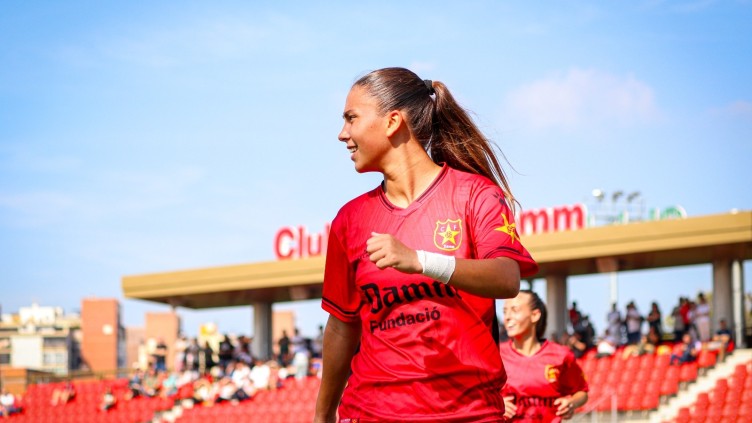
Photo from LinkedIn
For years, women’s sport was presented as a promise. A space to be developed, a cause to support, or an emerging trend. That narrative no longer holds.
In Spain, women’s sport has consolidated into a mature social and cultural reality, supported by a broad and active base. And this growth cannot be explained only by recent elite success, but by something deeper and less visible: the presence of local ecosystems capable of sustaining progress over time.
A solid foundation… or just a headline?
More than half of women in Spain report practicing sport on a regular basis. Crossing that threshold is not anecdotal; it marks a genuine turning point.
It means that women’s sport no longer lives exclusively in major events or elite competition. It is part of daily routines, health habits, effort management and long-term improvement processes. In other words, it has become part of real life for many people.
This context changes the frame of reference. Women’s sport is no longer something “to support” but a shared language, deeply connected to the everyday experience of a significant part of society.
Equality, culture and daily practice
The progress of women’s sport in Spain is widely perceived as a structural shift linked to equality of opportunity. Not a passing trend or a short-term reaction, but a sustained process.
This matters because, in this space, behaviors such as cooperation, shared leadership, resilience and consistency are not built through statements, but through daily practice. They are trained, lived and consolidated in real environments, often with fewer resources, yet with strong internal coherence.
When the ecosystem responds, results multiply
The importance of the local ecosystem becomes especially clear when women’s sport is viewed from a broader perspective.
Barcelona has been the stage for some of the most recognizable milestones in global women’s football: record-breaking attendances that placed the city firmly on the international map, sporting projects that have set the continental benchmark, and players developed locally who have gone on to receive the highest individual recognition in world football.
Figures like Alexia Putellas and Aitana Bonmatí embody that journey from local development to global influence.
But this ecosystem goes far beyond football.
In aquatic sports, athletes such as Mireia Belmonte, or artistic swimming icons like Gemma Mengual and Ona Carbonell, reflect a culture of excellence built through continuity and long-term work.
The same logic appears in very different disciplines, from endurance and resilience in motorsport, represented by Laia Sanz, to technical precision and creativity in snowboarding with Queralt Castellet. In tennis, Paula Badosa, closely linked to Barcelona, has competed at the highest level of the global circuit. In paddle tennis, athletes like Ari Sánchez and Marta Marrero have helped place the sport on the international map, while in sailing, competitors such as Natalia Via-Dufresne and Nora Brugman highlight how this ecosystem also extends to Olympic disciplines linked to the territory.
Different sports, different paths.
What they share is not a single structure or formula, but a common environment: local roots, long-term development and a culture that supports performance over time.
When that ecosystem is in place, with an active social base, deeply rooted sporting culture and structures designed for the long run, high performance stops being an exception. It becomes a natural outcome.
In that sense, these achievements are not just sporting successes. They function as a sign of maturity: women’s sport has reached a scale capable of mobilizing audiences, creating role models and sustaining excellence over time.
This represents meaningful progress. There is still work to be done, without question, but today solid grassroots structures are already in place. The next challenge lies in coordinated commitment from key stakeholders and the allocation of resources that allow this opportunity to be consolidated in the long term.
What this means for organizations
For companies, this context opens up a clear opportunity.
Women’s sport no longer represents only an aspirational message, but a real environment in which to work on culture, wellbeing, leadership and team cohesion through shared experience.
It is not about organizing isolated activities or creating artificial narratives. It is about connecting people with environments where the values many organizations seek are already practiced on a daily basis.
When a sporting experience is integrated into a strong local ecosystem, its impact changes. Conversations continue beyond the event. Learnings transfer more naturally into the professional environment. And the experience moves beyond a one-off moment to become part of a team’s collective story.
A point of maturity
Women’s sport has reached a level of maturity that makes it a genuine lever of value and purpose. Not as a trend or symbolic gesture, but as a coherent expression of a culture that already exists and continues to grow.
At ICONO Sports Events, this is exactly where we operate: connecting organizations with authentic elite sporting ecosystems (women’s and men’s) where experiences are not designed to be observed, but to be lived from the inside.
Sport becomes meaningful for organizations once it reflects how people live, train and grow within a community, over time.